15 Essential Gardening Tools Every Gardener Needs
Gardening becomes much easier when you have the right equipment for the job. Whether you are growing vegetables in raised beds, maintaining flower borders, caring for containers, or simply keeping your backyard tidy, a few dependable gardening tools can save time and make routine tasks more comfortable.
You do not need a shed full of expensive equipment to get started. A practical collection of hand tools, digging equipment, pruning tools, watering supplies, and a few useful accessories can handle most everyday garden tasks. The right choices also depend on the size of your garden, the type of plants you grow, and how frequently you work outdoors.
Disclaimer
This article may contain affiliate links. We may earn a small commission from qualifying purchases at no extra cost to you. Your support helps us create useful gardening content.
What We Looked for When Choosing Essential Gardening Tools
For this guide, we focused on the qualities that matter most when comparing garden equipment rather than simply choosing products because they look attractive. These include durability, material, comfort, ease of use, versatility, maintenance requirements, and suitability for common gardening jobs. For frequently used tools, construction and ergonomics are particularly important.
1. Hand Trowel
(Best for Planting and Small Jobs)
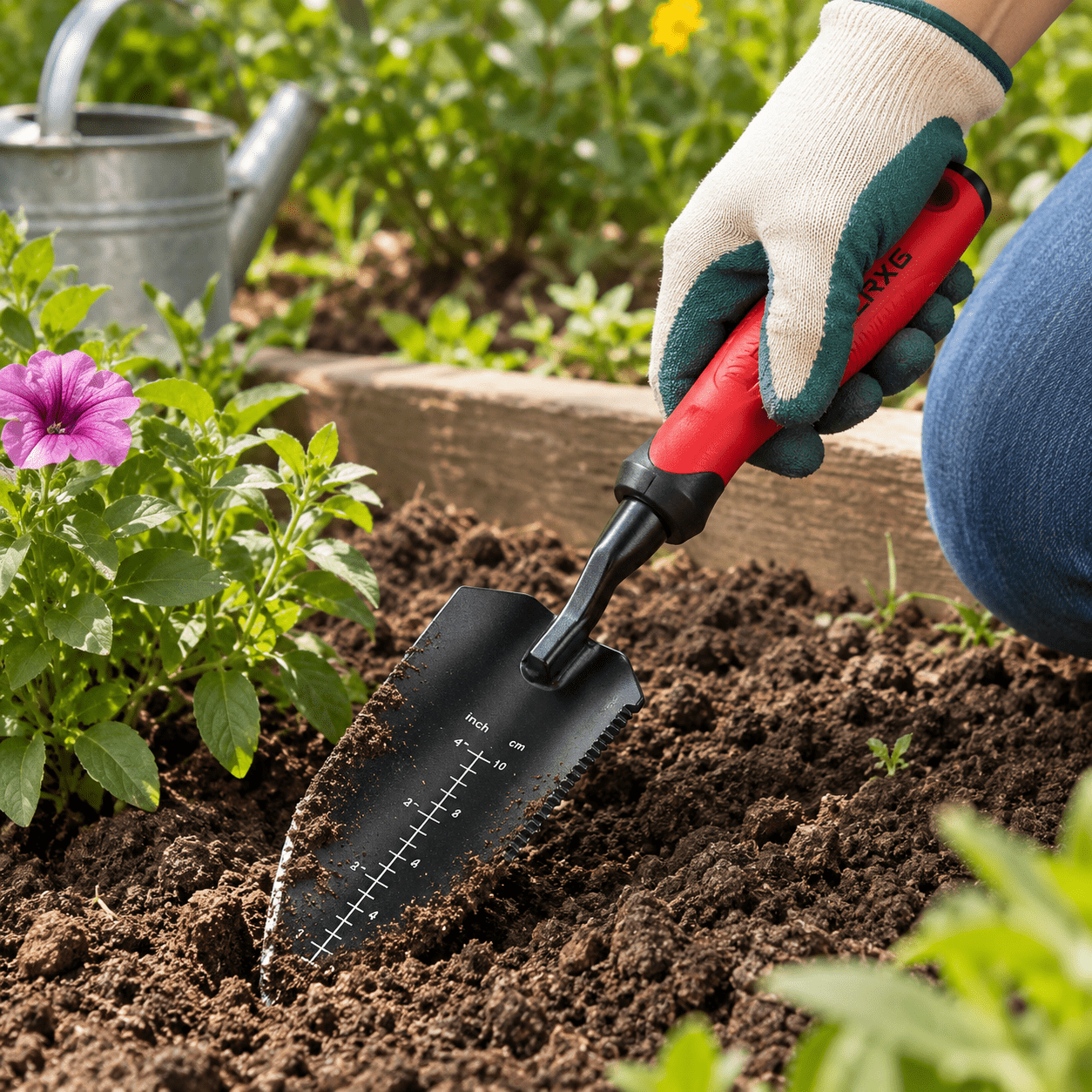
A hand trowel is one of the basic gardening tools most gardeners will reach for repeatedly. Its compact size makes it useful for digging small planting holes, transplanting seedlings, and working in containers.
Our pick: A heavy-duty stainless-steel or aluminium trowel is a practical choice for regular home gardening.
2. Bypass Pruning Shears
(Best for Cutting Plants)
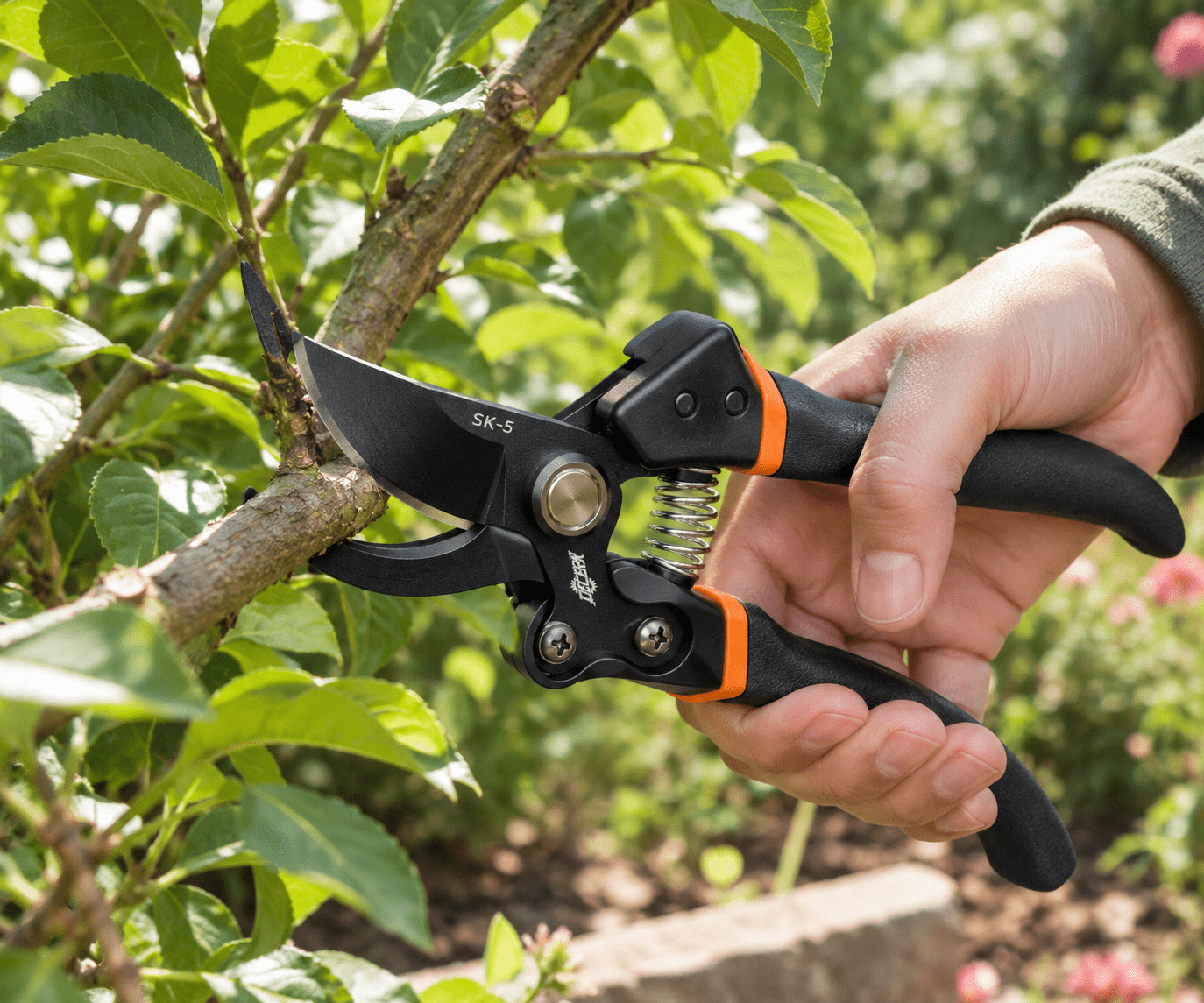
Pruning shears are essential when your garden includes flowering plants, shrubs, herbs, vegetables, or young branches that need regular trimming.
Our pick: A quality bypass pruner makes sense for gardeners who regularly prune flowers, herbs and small branches.
3. Gardening Gloves
(Best for Everyday Protection)
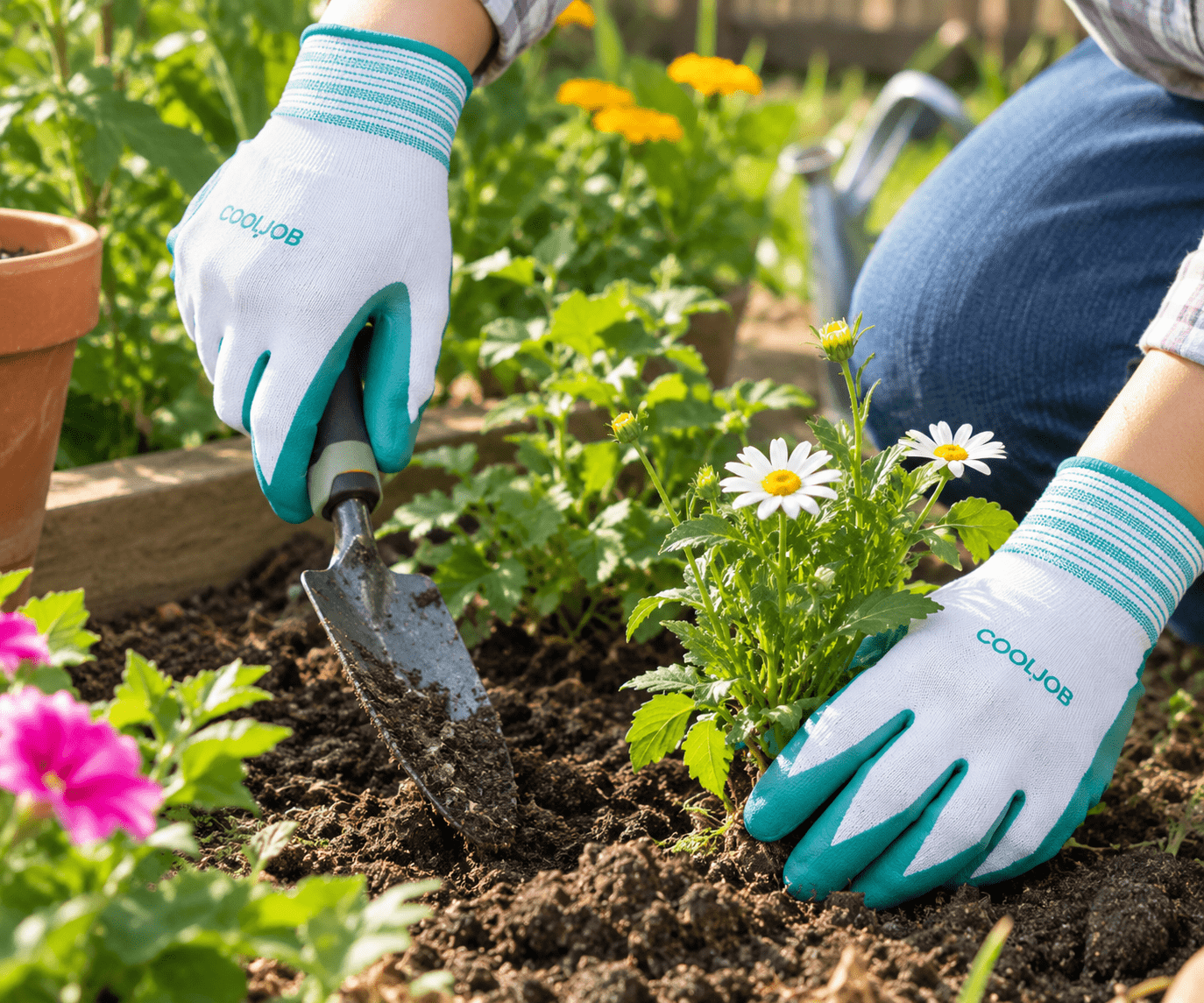
Gloves may seem simple, but they are among the most useful gardening essentials. Digging, pruning, handling rough materials and pulling weeds can expose your hands to dirt, scratches, blisters and thorns.
Our pick: Choose gloves based on the job instead of simply buying the thickest pair available.
4. Garden Fork
(Best for Loosening Soil)
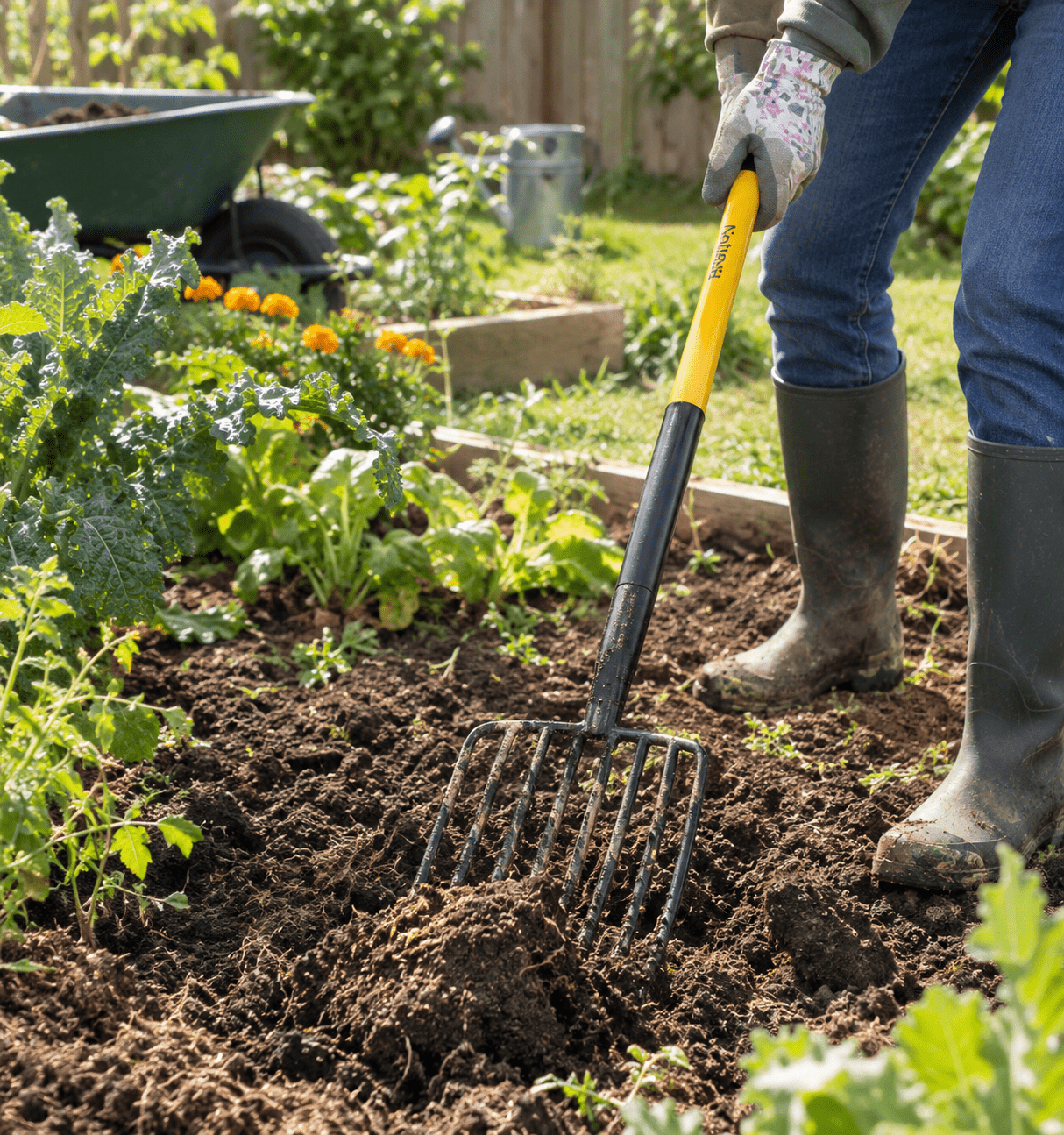
A garden fork has several strong tines that can penetrate soil and help loosen compacted areas. It can also be useful for turning compost, moving loose organic material and working around established beds.
Our pick: A strong digging fork is especially useful for vegetable beds and compacted soil.
5. Garden Hoe
(Best for Weeding & Cultivating)
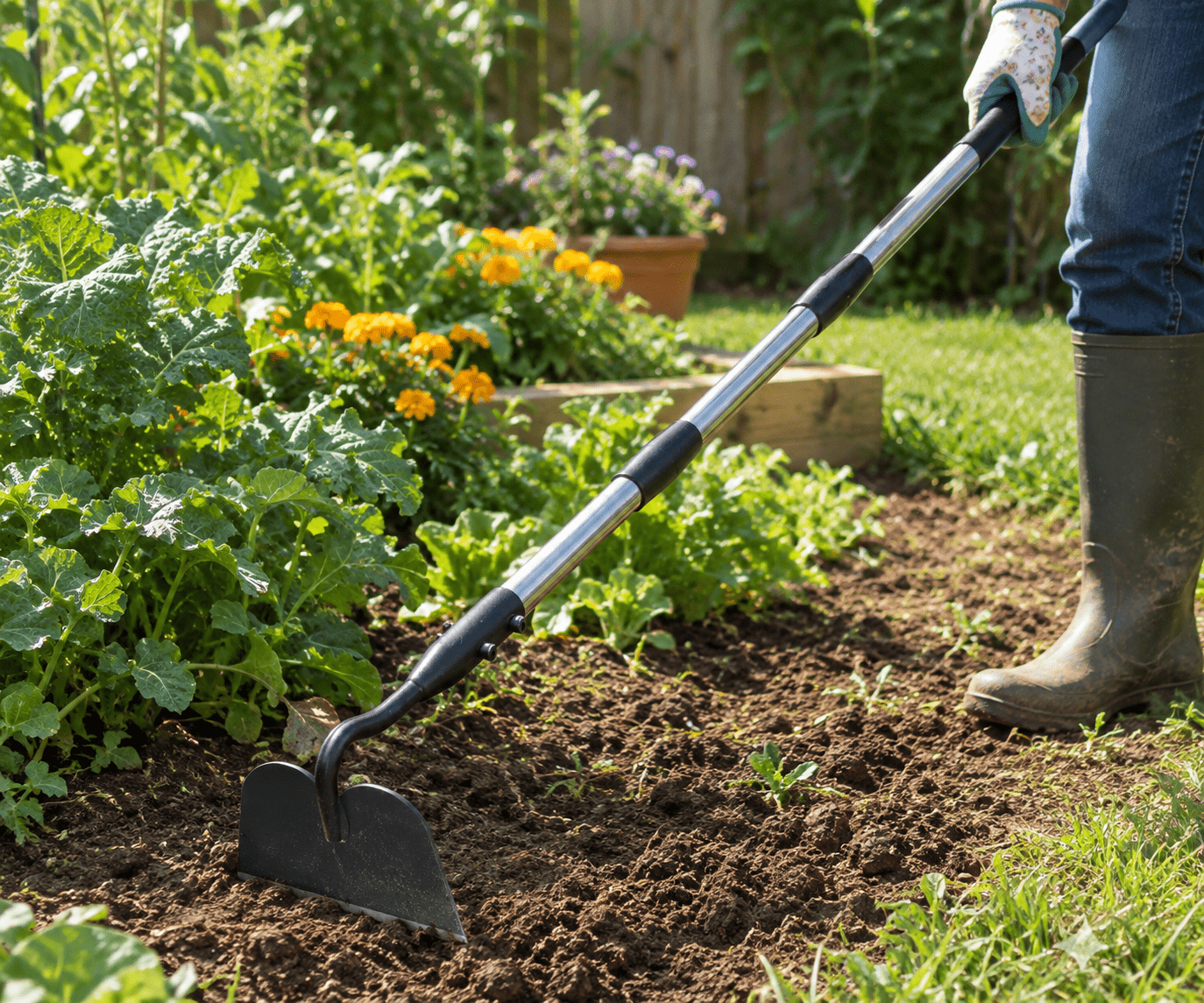
For maintaining vegetable beds and flower gardens. It can help loosen the upper layer of soil, create shallow planting rows and remove small weeds.The shape of the hoe matters because different designs are intended for different jobs.
Our pick: A traditional hoe is a useful addition if your garden requires regular weeding or soil cultivation.
6. Garden Shovel
(Best for Heavy Digging)
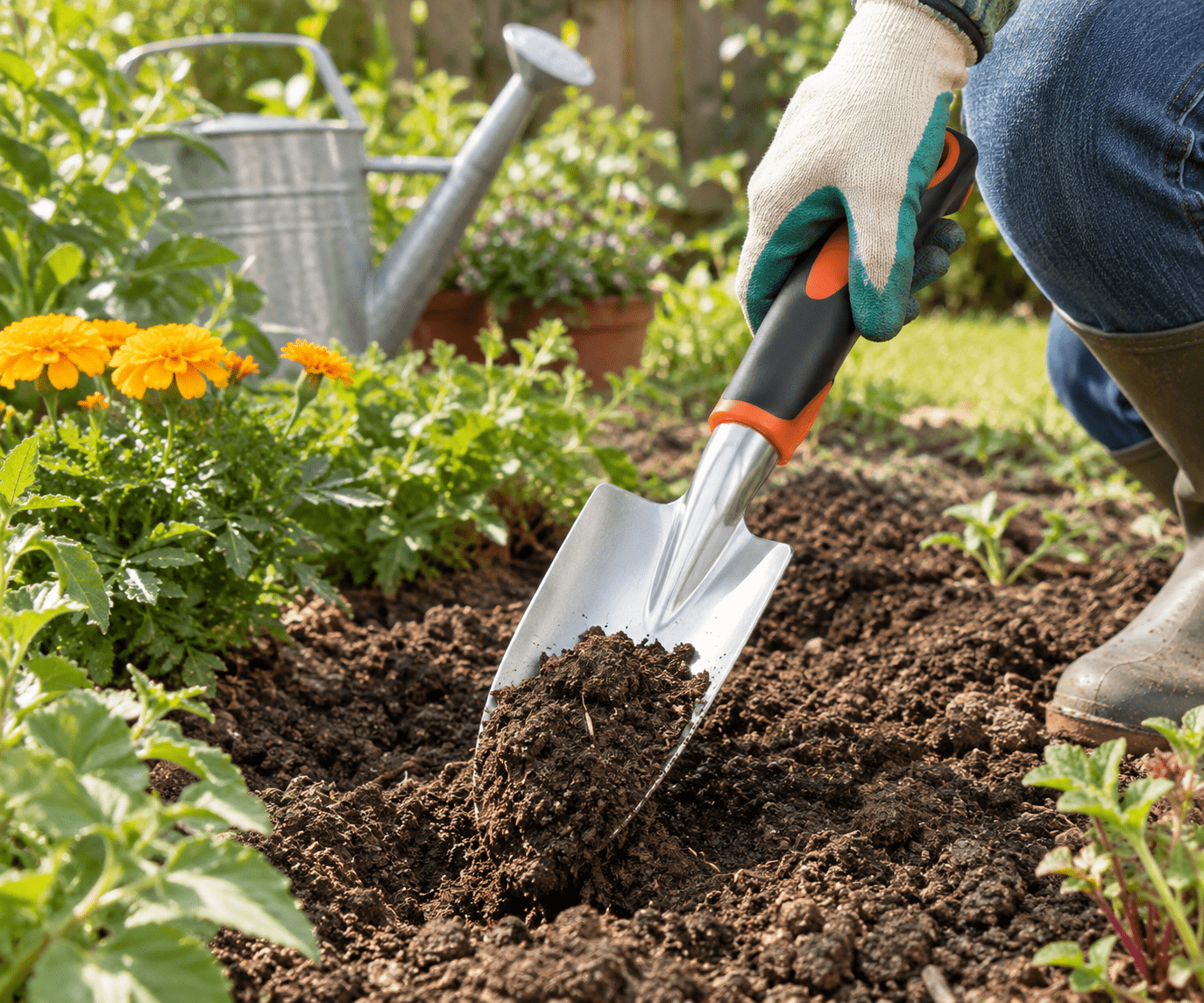
A round-point shovel is a versatile option for general digging, while different blade shapes can be better suited to specific landscaping tasks.
Our pick: A sturdy round-point shovel is a practical starting point for most homeowners.
7. Garden Rake
(Best for Clearing and Leveling)
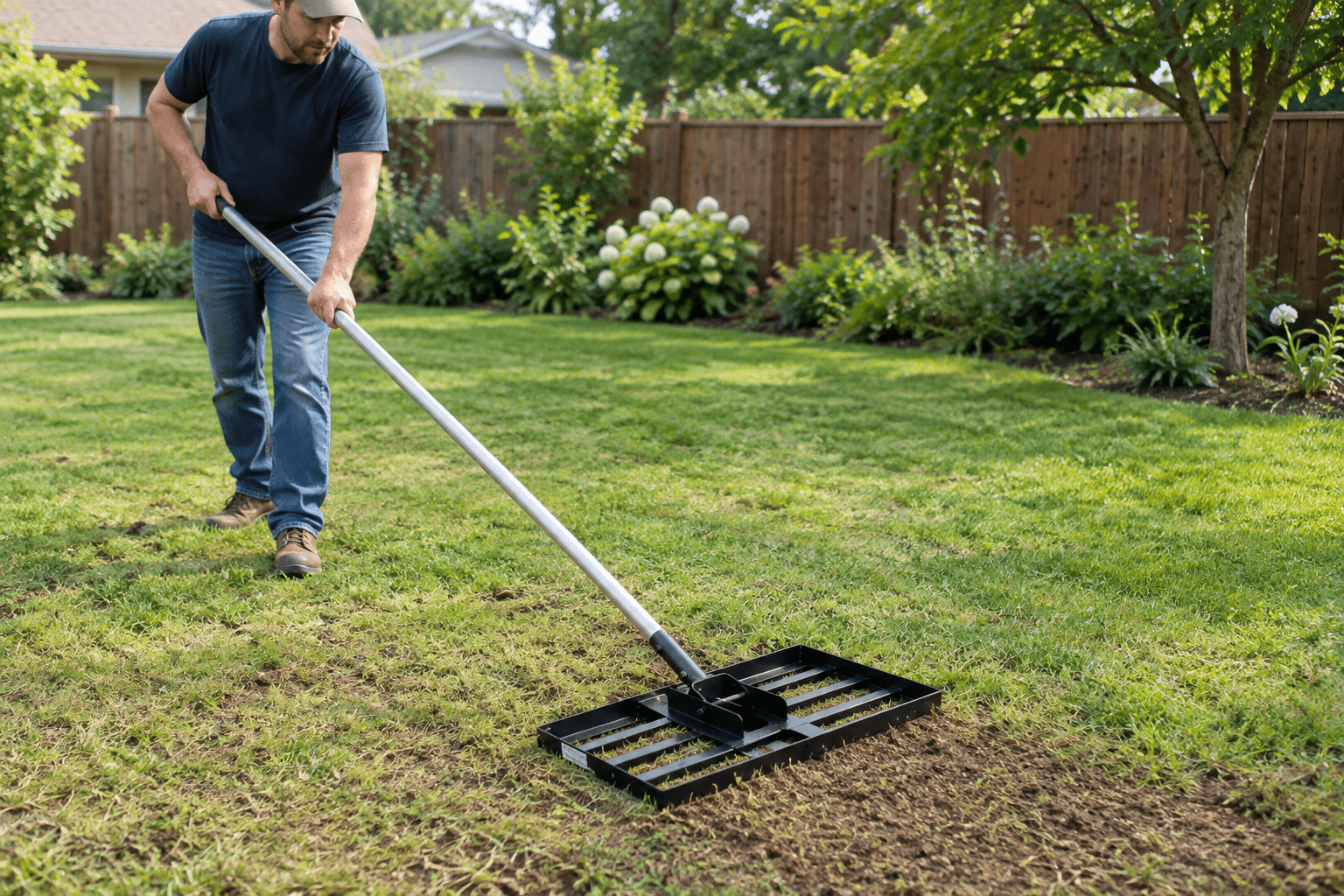
A rake helps remove leaves, grass clippings and other garden debris. Do not assume every rake performs the same job. Leaf rakes usually have flexible, fan-shaped tines, while bow or garden rakes have stronger tines intended for heavier soil work.
Our pick: Choose a leaf rake for lightweight debris and a bow rake for heavier soil work.
8. Hori Hori Garden Knife
(Best Multi-Purpose Hand Tool)
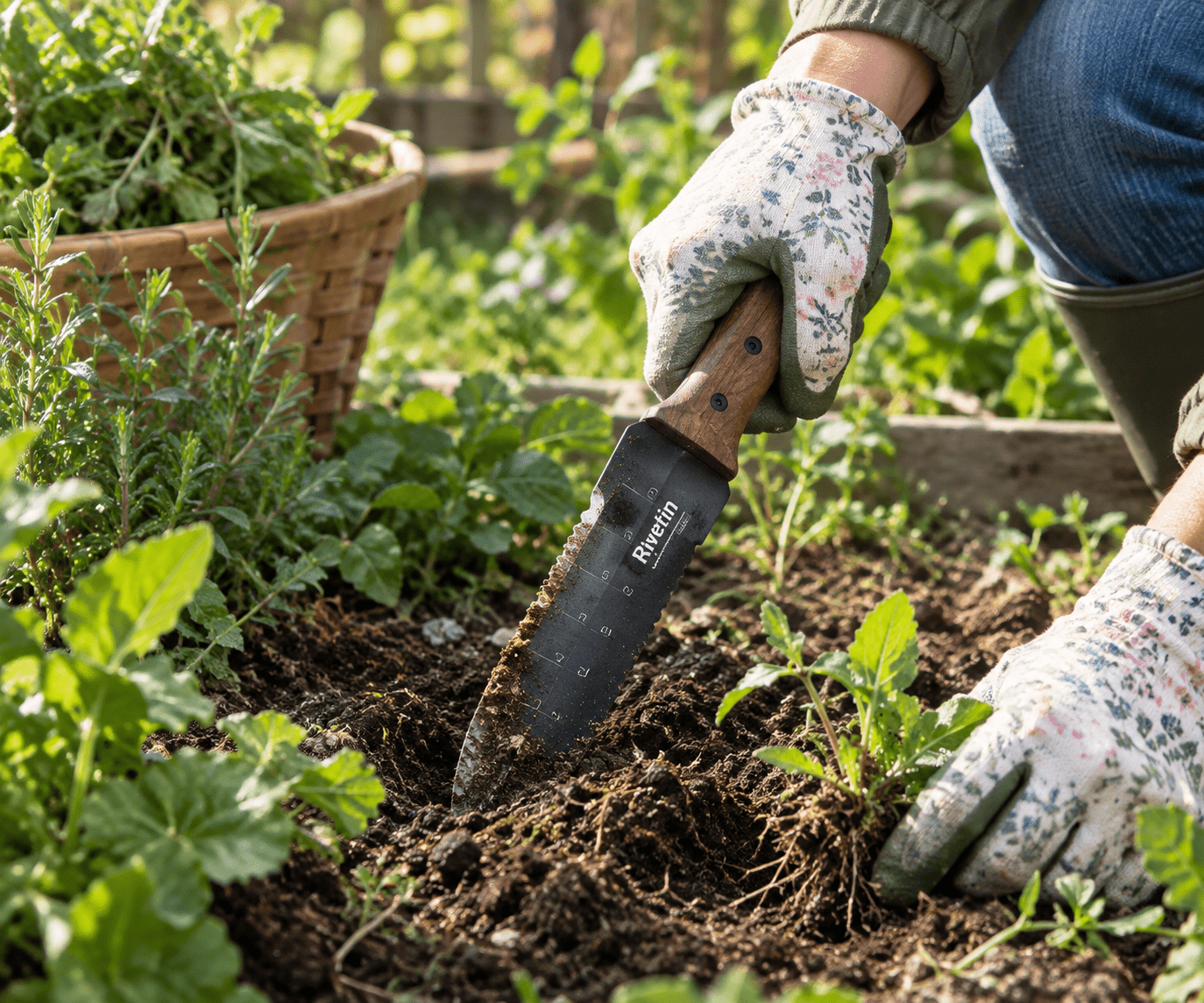
A Hori Hori knife is a versatile gardening tool for digging and planting. Its pointed blade also helps cut roots and remove weeds.
Our pick: Useful for gardeners who want a versatile hand tool rather than carrying several separate tools.
9. Watering Can
(Best for Containers and Small Gardens)
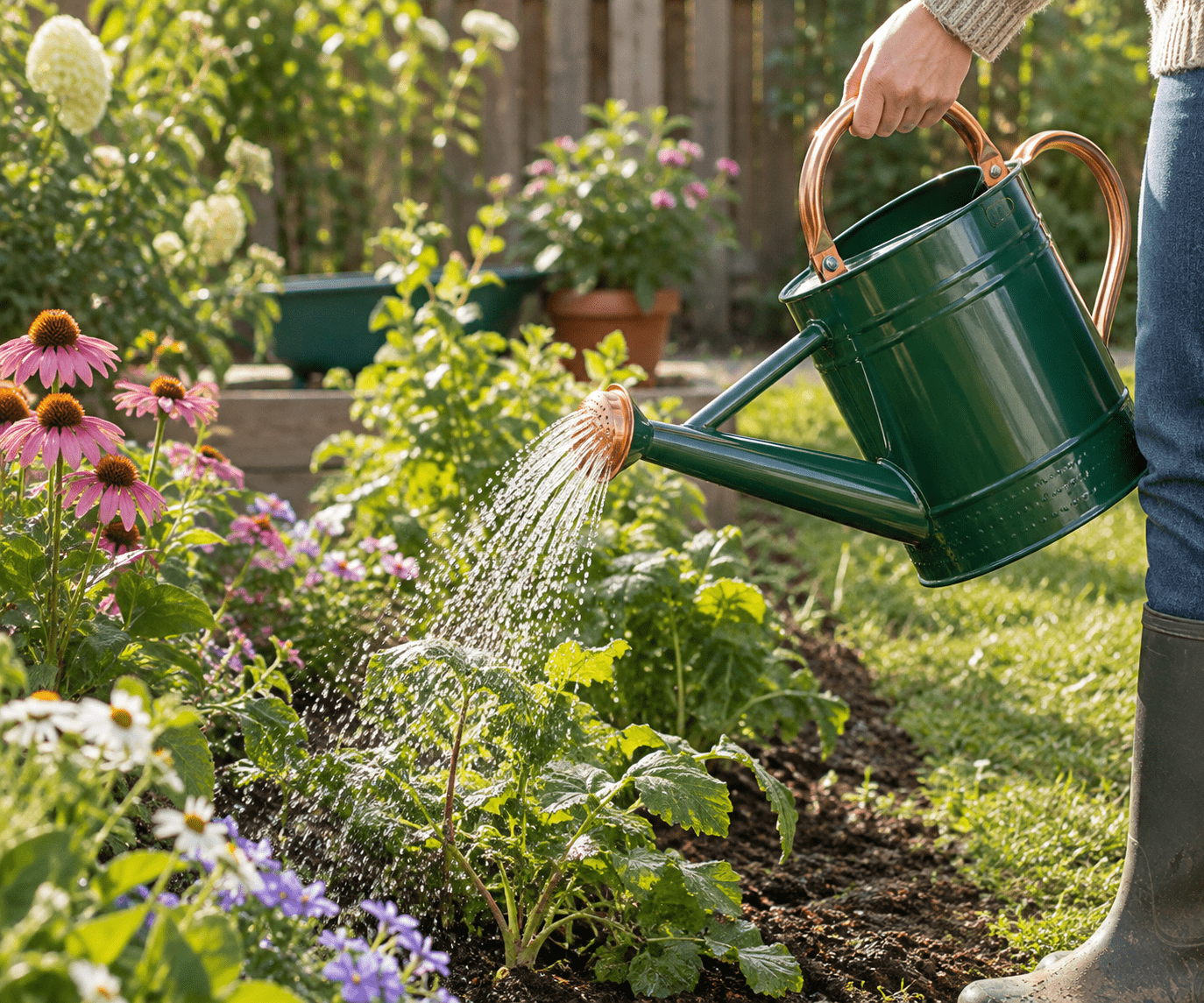
A watering can is one of the simplest tools for gardening. Useful for seedlings, indoor plants, containers and smaller garden beds.
Our pick: A medium-capacity watering can is easier to control than an oversized model for most container gardeners.
10. Garden Hose
(Best for Larger Gardens)
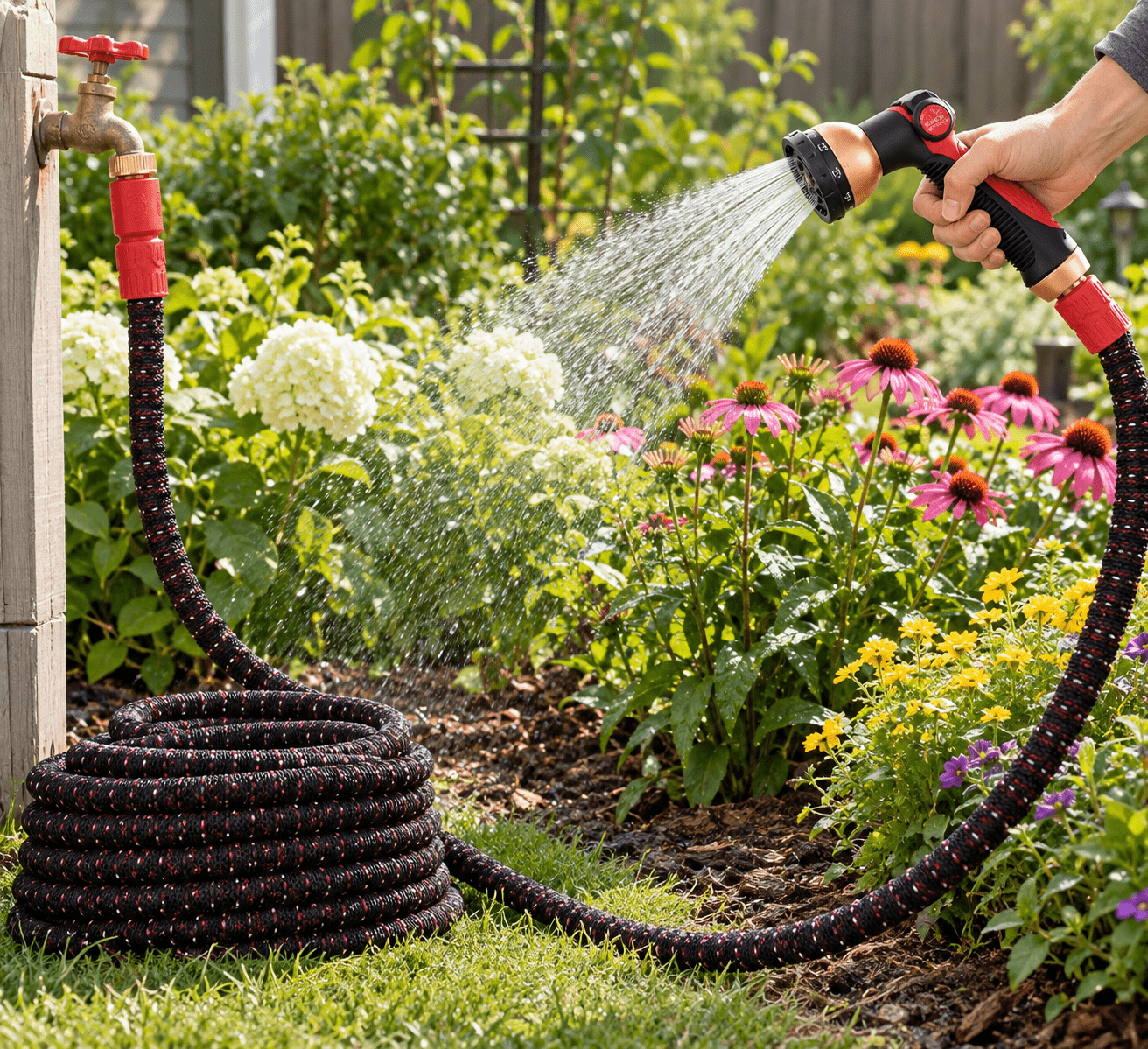
A garden hose is ideal for watering large areas.Choose one with good flexibility, durable connections, suitable length, and kink resistance.
Our pick: Choose the hose length according to your garden rather than automatically buying the longest option.
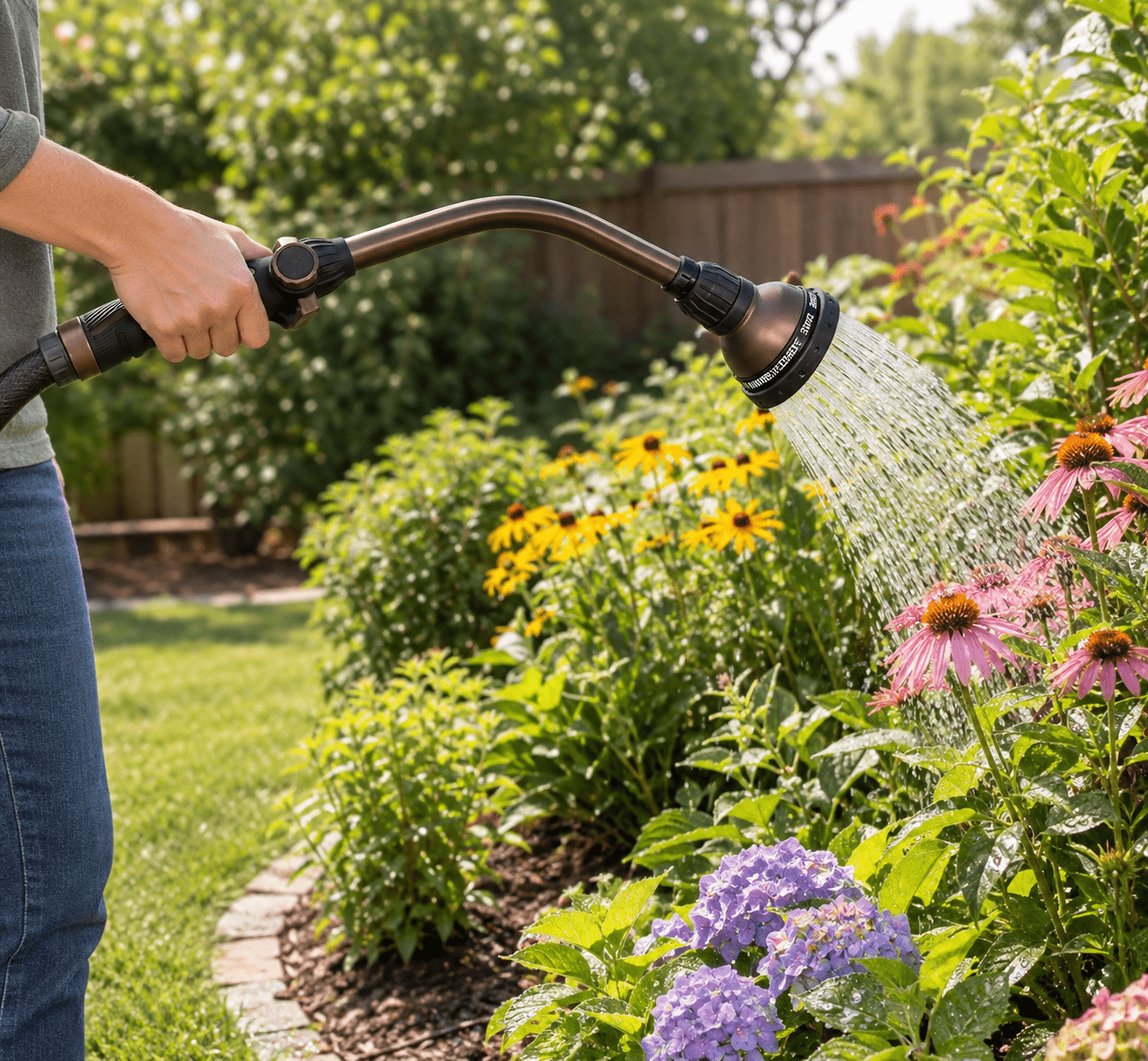
11. Watering Wand
(Best for Gentle Watering)
A watering wand extends your reach and allows you to direct water toward plants without bending down repeatedly.
Our pick: A lightweight watering wand with adjustable flow is a useful upgrade for gardeners who already own a hose.
12. Loppers
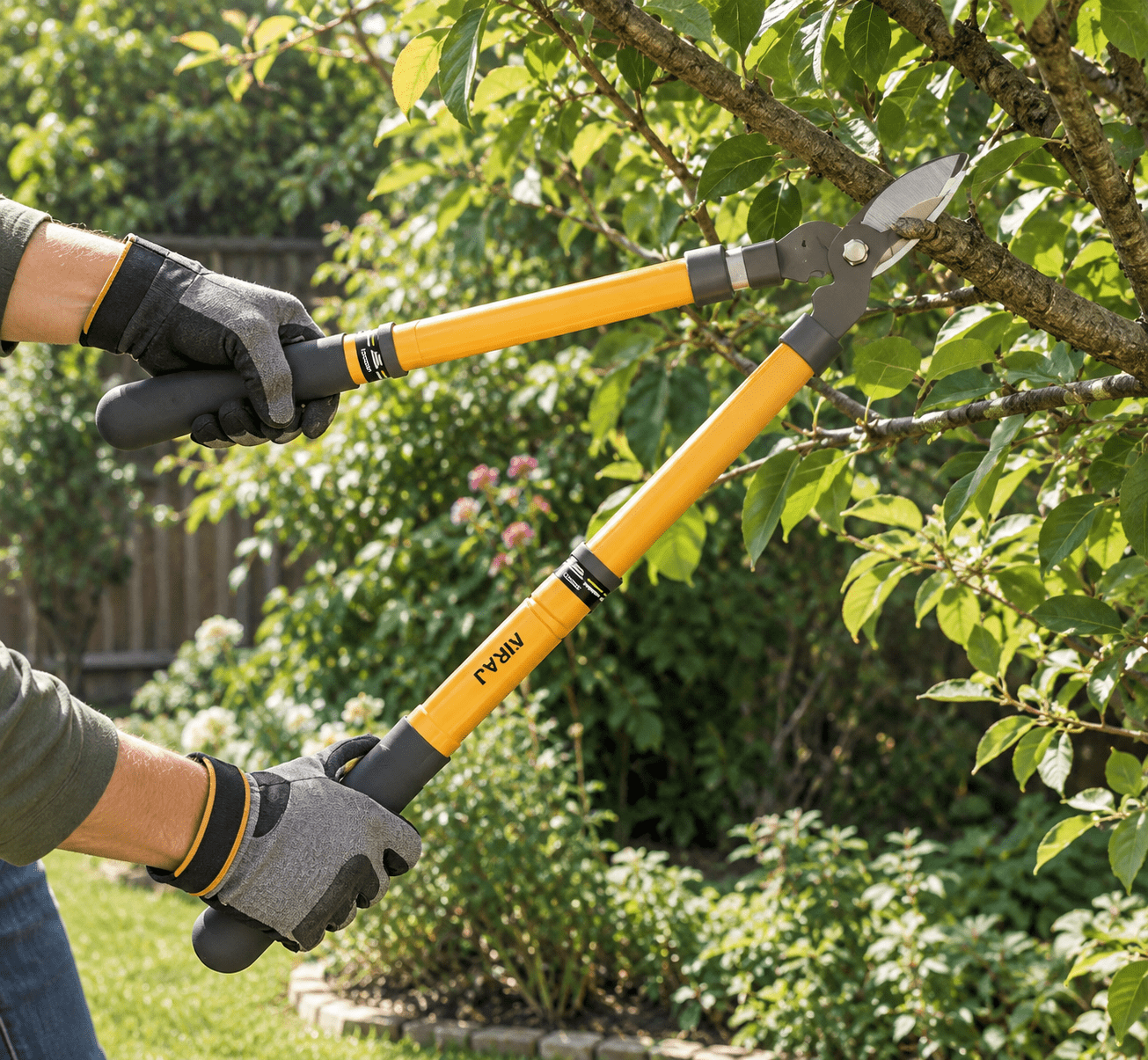
(Best for Thicker Branches)
Pruning shears suit small stems, while loppers handle thicker branches. Their long handles provide extra cutting power.
Our pick: Bypass loppers are a useful choice when your garden contains shrubs or branches that are too thick for hand pruners.
13. Wheelbarrow
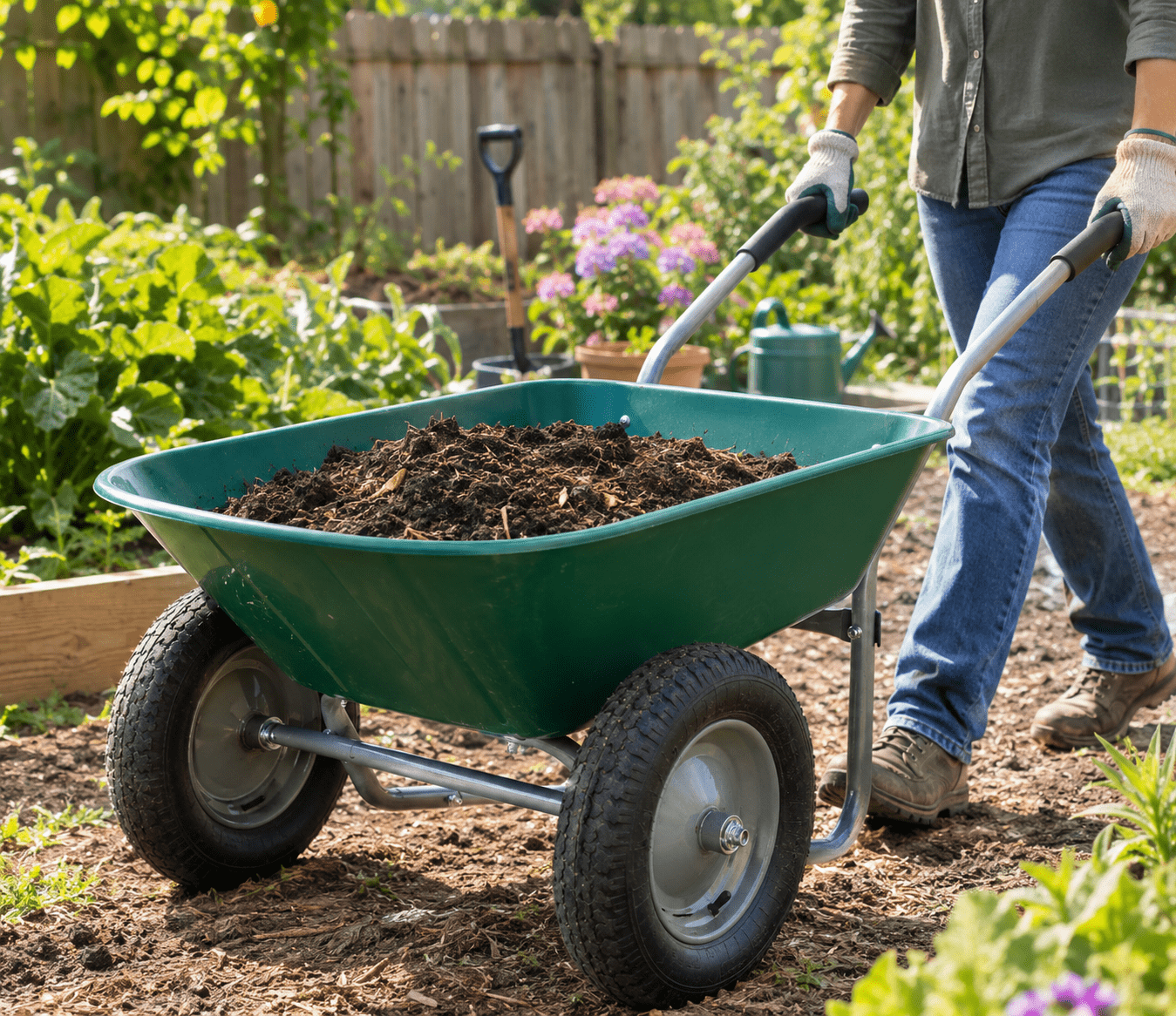
(Best for Moving Heavy Materials)
A wheelbarrow becomes valuable when your gardening jobs involve compost, soil, mulch, stones, leaves or other bulky materials.
Our pick: Choose stability and maneuverability before simply choosing the largest capacity.
14. Garden Kneeler
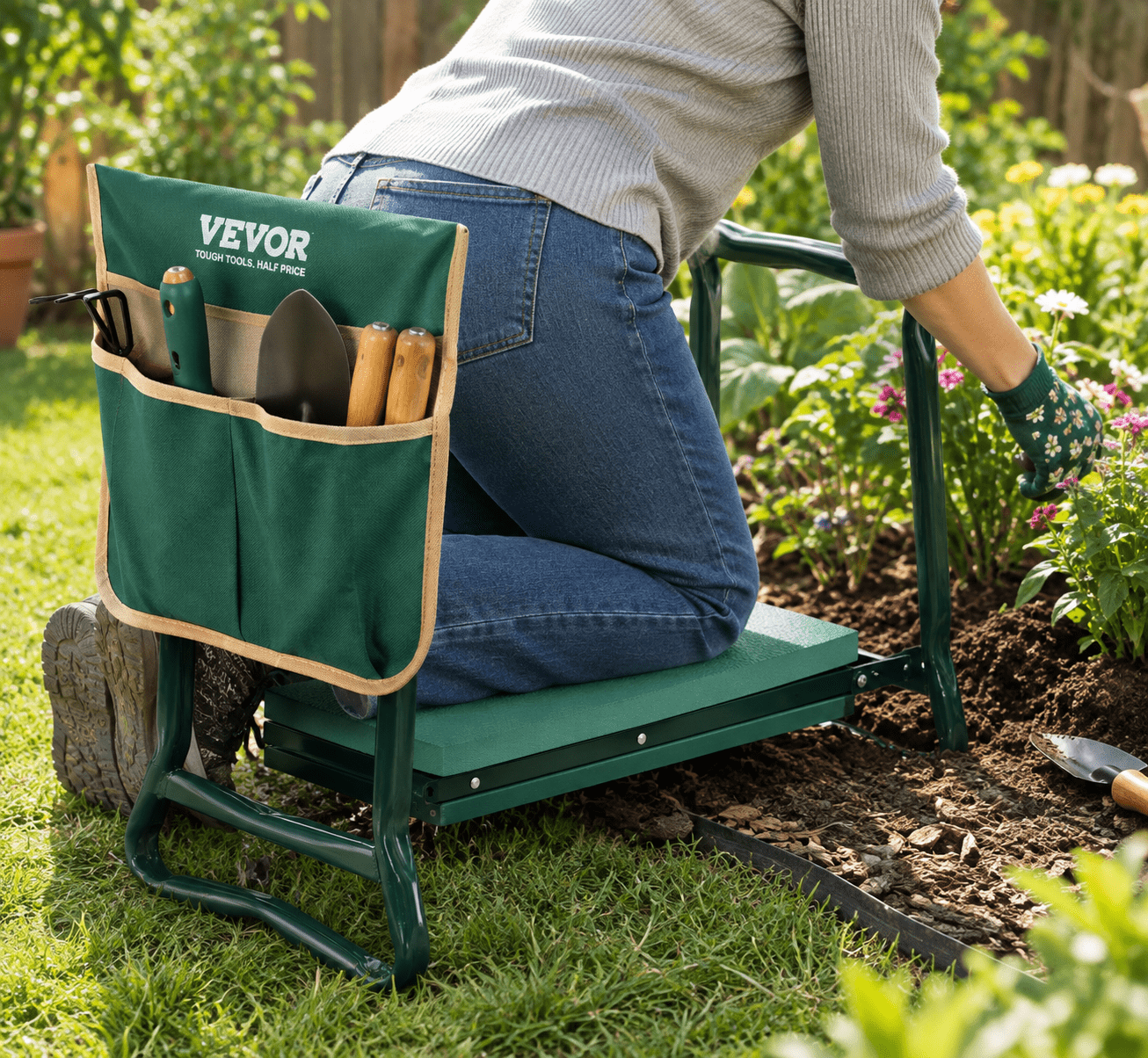
(Best for Comfort)
A padded garden kneeler reduces discomfort while planting, weeding, and trimming. Some models also double as a small garden seat.
Our pick: A foldable kneeler is a practical choice for gardeners who spend long periods working close to the ground.
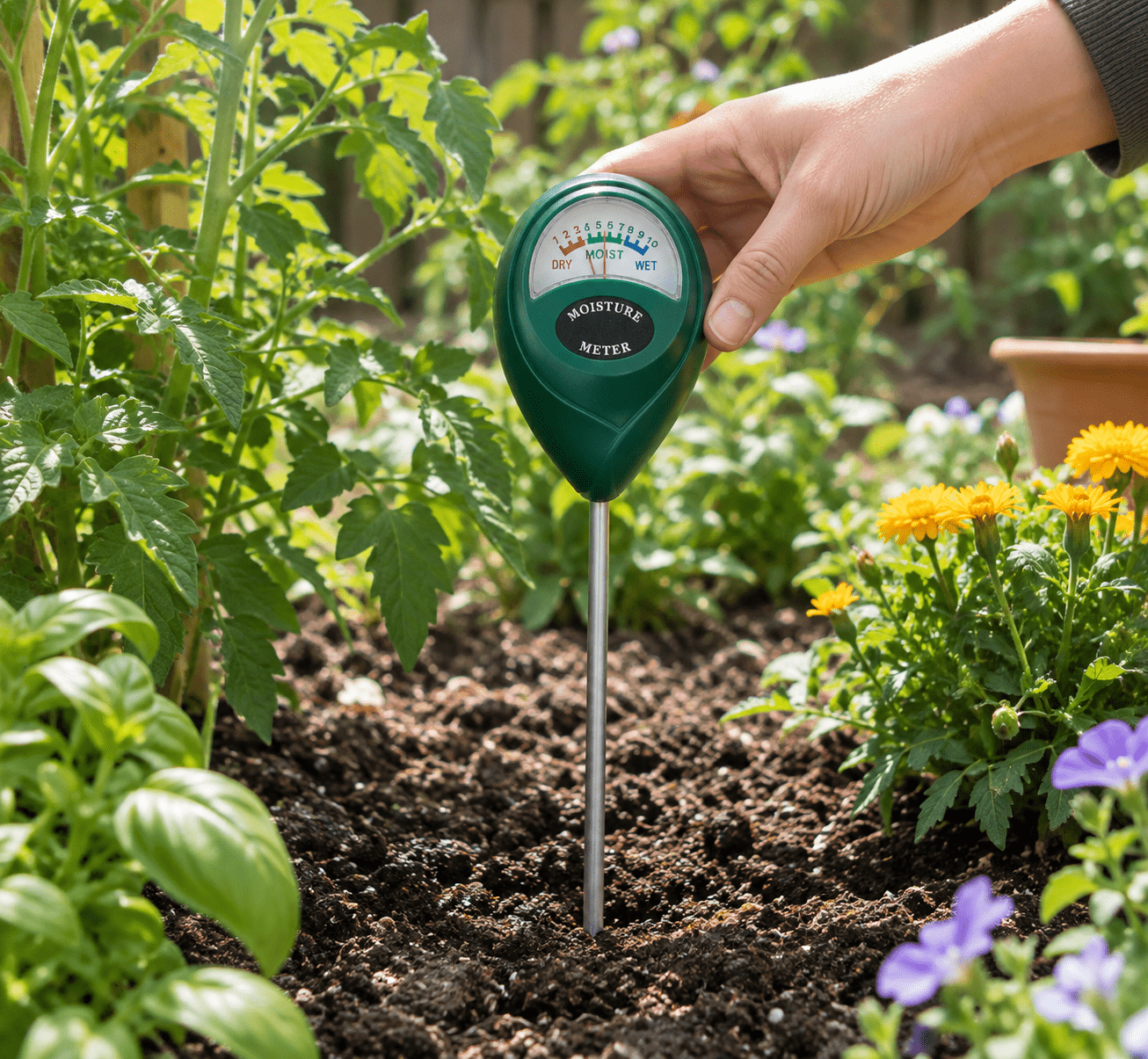
15. Soil Moisture Meter
(Best for Checking Soil Moisture)
A soil moisture meter helps you check soil moisture before watering. It prevents overwatering and underwatering your plants.
Our pick: A basic moisture meter can be useful for beginners who are still learning how different plants respond to watering.
Which Gardening Tools Should a Beginner Buy First?
You do not need to purchase all 15 items at once. If you are building your first toolkit, start with the tools that cover the most common tasks.
Gardening gloves, Hand trowel, Bypass pruning shears, Fork, Hoe, Shovel, Rake, Watering can or hose.
These cover the four major categories of everyday garden work: planting, soil preparation, pruning and watering. Once you understand what you actually do in your garden, you can add tools such as loppers, a Hori Hori knife, a wheelbarrow, or a soil moisture meter.
How to Choose the Right Garden Tools?
Choosing the right essential gardening tools makes everyday garden care easier. Buying the first attractive tool you see can leave you with equipment that is uncomfortable, difficult to store or poorly suited to your garden. Instead, consider these factors before purchasing.
1. Consider Your Garden Size
A small balcony or container garden does not require the same equipment as a large backyard vegetable garden. For containers, prioritize hand tools and watering equipment. For larger beds, full-size digging tools, rakes and carts become more useful.
2. Check the Material
Tool material affects durability and maintenance. Stainless steel can offer useful corrosion resistance, while carbon steel can provide strong cutting performance but requires more attention to prevent rust.
3. Think About Comfort
A tool that feels comfortable in your hand is more likely to be used regularly. Handle shape, grip material, weight and overall balance all matter.
4. Match the Tool to the Job
Do not buy a specialized tool simply because it looks impressive. If your main task is planting seedlings, a quality trowel is more useful than an expensive pruning saw. If you have mature shrubs, loppers may provide more value.
5. Consider Storage
Garden equipment lasts longer when it is cleaned and stored properly. Long-handled tools should have a suitable storage location, while sharp tools should be stored safely. Cleaning, drying and storing tools properly also helps reduce rust and deterioration over time.
Conclusion:
The right toolkit does not have to contain dozens of products. A few dependable basics can handle most everyday gardening tasks, and you can add specialized equipment as your garden grows.
For most beginners, a hand trowel, pruning shears, gloves, garden fork, hoe, shovel, rake and watering equipment are a sensible place to start. Larger gardens may benefit from additional tools such as loppers, a wheelbarrow, watering wand and Hori Hori knife.
The most important thing is to match each purchase to the work you actually do. A durable tool that feels comfortable in your hands and performs its intended job is usually more useful than a large collection of inexpensive gadgets.